CN / EN
Recruitment
Product
About Us
Tianzhi Intelligent Knowledge Library
Product OverviewCore FunctionsProduct AdvantagesApplication Scenarios

Product Overview

TRS Tianzhi Intelligent Knowledge Library is an intelligent management platform centered on unlocking knowledge value. It integrates knowledge from various sources, including local files and team collaboration outcomes. Adhering to the concept of "full-process knowledge management + AI-driven + scenario-based application", it covers the entire lifecycle of knowledge—from collection, processing, and management to application. Leveraging advanced AI technologies, the platform is highly adaptable to specific business scenarios across different industries, providing enterprises with customized and precise knowledge services to fully unleash the value of knowledge. The platform not only efficiently collects knowledge in diverse formats (such as documents, spreadsheets, and images) and conducts intelligent analysis on it but also possesses core capabilities including tag system construction, multi-dimensional filtering and retrieval, and knowledge deduplication and integration—organizing fragmented knowledge into structured content for storage. Its intelligent Q&A algorithm accurately matches users’ knowledge needs. Whether individual workers need to systematically manage scattered information or enterprise teams aim to build organizational-level knowledge assets, Tianzhi Intelligent Knowledge Library enables efficient, full-process intelligent management. It helps users quickly locate key information, improve the efficiency of knowledge reuse, and serves as a core tool for knowledge management and innovation in the digital era.

Core Functions

Intelligent Q&A and Cross-Library Retrieval Tianzhi Intelligent Knowledge Library builds an intelligent Q&A engine powered by natural language processing, supporting two Q&A modes: targeted Q&A for designated knowledge libraries and real-time Q&A for uploaded local files. Based on the intent of users’ questions, the system intelligently recommends relevant questions, enabling a closed-loop interaction of "question association - knowledge expansion". It also supports switching to "Deep Thinking Mode" to meet the accuracy requirements of different business scenarios. Additionally, cross-library retrieval technology breaks down knowledge silos, enabling associated access to multi-source data.
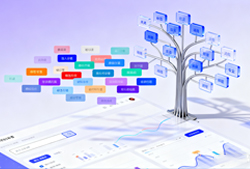
Intelligent Tag Management The library supports dual modes of AI automatic tagging and manual tagging by users. The tag system is strictly bound to a single knowledge library. Users can customize tag categories via a visual interface and batch add/modify tags within the same library. Based on semantic models, AI intelligently analyzes document content, automatically extracts core keywords, and tags documents accordingly. It also implements the function of "Q&A by designated tags in the knowledge library", allowing users to quickly filter and retrieve related documents in the library through tags.
Full-Link Knowledge Traceability An original "document-paragraph" two-level traceability mechanism has been developed. When AI generates answers, it automatically annotates the sources of reference documents and uses advanced technology to highlight and visualize original text citations. The system locates the cited paragraphs in the original text and supports one-click navigation to their original positions. It also records the entire knowledge processing process, including metadata such as collection time and processors (personnel).
Multimodal Knowledge Presentation By breaking through the limitations of traditional text output, a diversified response system of "text + chart + image" has been constructed. The system can automatically generate association graphs (such as "person-event-region" relationship diagrams) and data visualization charts (trend charts/proportion charts) based on knowledge types.
Multilingual Intelligent Interaction It supports mixed input and output in multiple languages, including Cantonese, English, and Mandarin. It is capable of automatically converting Cantonese to Traditional Chinese and intelligently translating English professional terms. The system can switch interaction modes according to users’ language preferences, adapting to diverse scenarios such as cross-border teams and dialect-speaking regions.
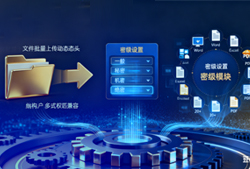
Full-Lifecycle Knowledge Management Hub Intelligent Collection: Supports batch upload of files and folders in over 20 formats (e.g., Word/Excel/PDF) and allows setting data access permissions based on document content.
Intelligent Processing: Cleans knowledge through technologies such as deduplication, entity extraction, and text segmentation; automatically generates document summaries and keyword indexes to extract core points.
Intelligent Sharing: Offers a three-level sharing model ("private to self / visible to team members / public within the organization") and supports fine-grained configuration of access permissions by department, role, and user.
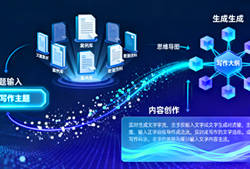
AI-Assisted Writing and Creation Platform It builds an end-to-end writing assistance chain: "topic input - material matching - outline generation - content creation". After users select a knowledge library and input a topic, the system automatically retrieves relevant materials to generate a writing outline, supports automatic content filling based on templates, and allows real-time supplementation of reference knowledge through questions. Users can also customize writing templates to complete creation more efficiently.
Full-Scenario History Records It centrally manages data from different scenarios (e.g., Q&A records, writing history) and supports operations such as keyword search, time-based sorting, and batch deletion—fully preserving knowledge interaction trails.

Product Advantages

  • Knowledge Management and Annotation Knowledge management supports centralized storage of multi-format files, breaking the dispersion of files across local devices and cloud storage to solve retrieval challenges. Knowledge annotation (manual or AI-powered) not only enables knowledge classification but also provides Q&A retrieval anchors for large models, facilitating accurate knowledge access and improving management and usage efficiency.
  • Precise Traceability and Authoritative Responses The unique one-click traceability function for reference documents in Tianzhi Intelligent Knowledge Library enables accurate association between AI answers and original materials. Through highlighted visualization and one-click positioning, it ensures the accuracy and traceability of knowledge application. Compared with the "AI hallucination" issue of general large models, Tianzhi demonstrates higher authority and reliability in professional field knowledge Q&A, providing solid knowledge support for enterprise decision-making.
  • Multilingual Interaction and Multimodal Presentation It supports input and output in multiple languages, accurately matching the communication habits of users in different regions to meet the needs of multilingual office scenarios. Meanwhile, it realizes combined responses of text and diverse visual charts, presenting knowledge in richer forms to enhance user interaction experience and knowledge comprehension efficiency—providing significant advantages in cross-cultural and cross-linguistic knowledge management scenarios.
  • Dual Classification Control and Security Assurance It adopts a dual classification control system, which intelligently matches document classification levels with user classification levels. It supports full-process permission control, ensuring data security throughout knowledge collection, storage, sharing, and application. Particularly suitable for industries with strict data security requirements (e.g., finance, government affairs, healthcare), it meets the on-premises deployment needs for confidential content and addresses security risks of traditional public cloud deployment.
  • Intelligent Writing and Efficient Creation Its powerful writing assistance functions (intelligent material matching, outline and content generation) significantly reduce users’ writing difficulty and time costs. Combined with enterprises’ proprietary knowledge libraries, it enables precise and professional content creation, improving the efficiency and quality of document generation (e.g., reports, official documents) and providing strong support for content creation in knowledge-intensive positions.
  • Flexible Sharing and Personalized Management It supports three sharing scope settings ("private to self / visible to team members / public within the organization"), which can be flexibly adjusted according to different needs to adapt to diverse knowledge application scenarios. Additionally, it provides functions such as custom knowledge library settings and team member permission management, meeting enterprises’ personalized knowledge management needs and realizing rational allocation and efficient utilization of knowledge resources.

Application Scenarios

In the government affairs field, Tianzhi Intelligent Knowledge Library can be applied to the full lifecycle of official document generation, review, and issuance. Through its intelligent Q&A function, government staff can quickly query knowledge such as policies, regulations, and historical official documents to support decision-making. Using its writing assistance function, the system can automatically generate official document outlines and content based on the selected policy knowledge library and topic, improving the efficiency of official document drafting. During the official document review phase, the system can conduct intelligent reviews of generated documents to support manual re-review, ensuring the accuracy and standardization of official document content. Meanwhile, to meet government information disclosure needs, it can build public knowledge libraries to enable efficient management and easy retrieval of knowledge such as policies, regulations, and government service guidelines.